
Writing, Reading & Running
What's "runs" got to do with it, got to do with it?

I had an amazing insight as I was running along my regular circuit last week - actually, I call it “jolking”. It’s my version of Japanese walking, where I jog for 3-5 minutes, then brisk walk for 3 minutes, and repeat that over 30 mins for 5 kilometres (a bit over 3 miles).
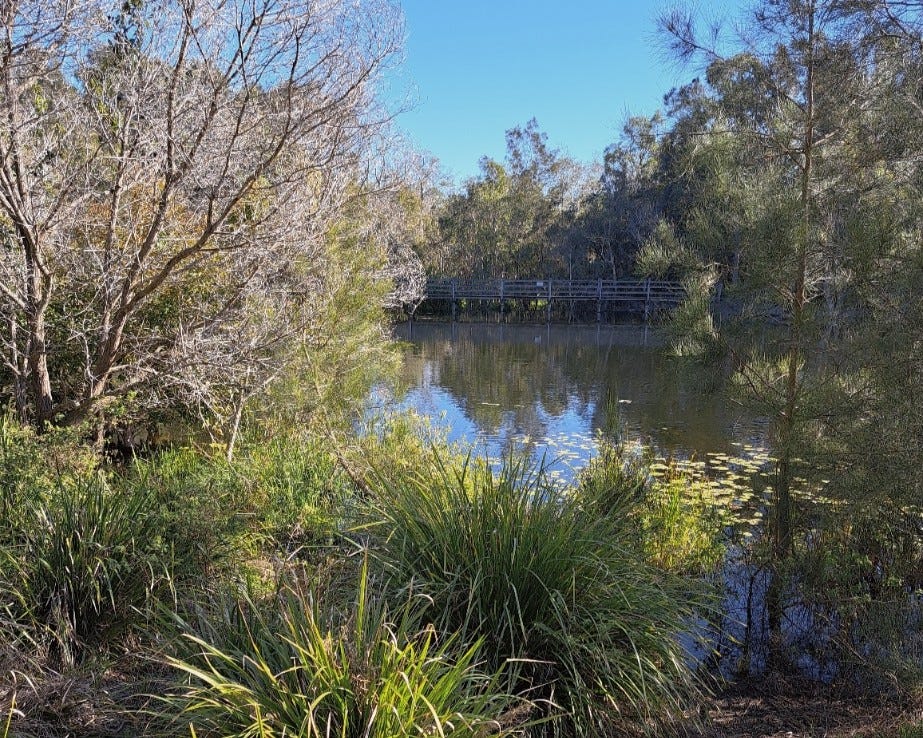
The circuit I “jolk” is one that KJ and I used to walk while she still could. I often remember as I run up that last hill how that was where Katrina would randomly start running because she wanted to push herself as much as she could, laughing with her unforgettably joyful laugh as I sprinted to catch up. She always delighted in being alive. The disease never infected her thinking or her attitude toward life.
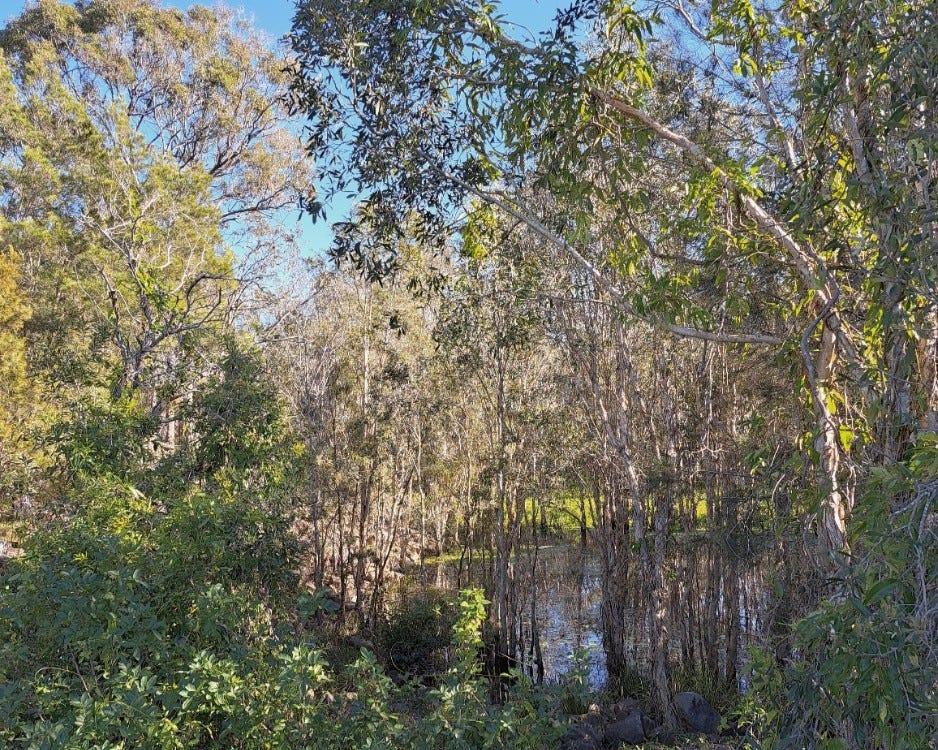
After KJ died, I did a term of Tai Chi. I needed to do something physical to help me process my deep grief. And when I looked into Tai Chi, it made a lot of sense. Although I feel like I’m still in my thirties, my body tells me all too quickly that I’m not when I start doing something like digging out a 20-yr-old tree stump!
As the class learned the first few steps during my first Tai Chi lesson, I was surprised to learn so much science concerning how the human body is designed to move.
The instructor smiled halfway through the third such explanation and said, “I reckon none of you thought you’d be getting some physics lessons this morning.”
Thankfully, learning to move according to how our bodies are designed made more than sense - it made a lot of movement effortless. Having learned martial arts when I was younger, I had to “unlearn” so many movement instincts. However, once I did, I was amazed at how effortless many movements became.
And when I started applying those lessons to how I perform some everyday activities, it transformed many parts of my life. For example, standing at my standing desk in a different way has taken so much pressure off my knee joints when I stand for a longish period of time writing things like this post.
When I was younger, I played a lot of hard-court tennis. I was also a fast bowler who regularly opened the bowling for my club cricket team. Both sports took a toll on my knees that I didn’t really feel or understand until my late thirties.
Over the last decade, it hasn’t taken much for my knees to “feel the pain.” It has meant I haven’t been able to jog much without experiencing significant pain that makes me stop all too swiftly.
Tai Chi has changed that.
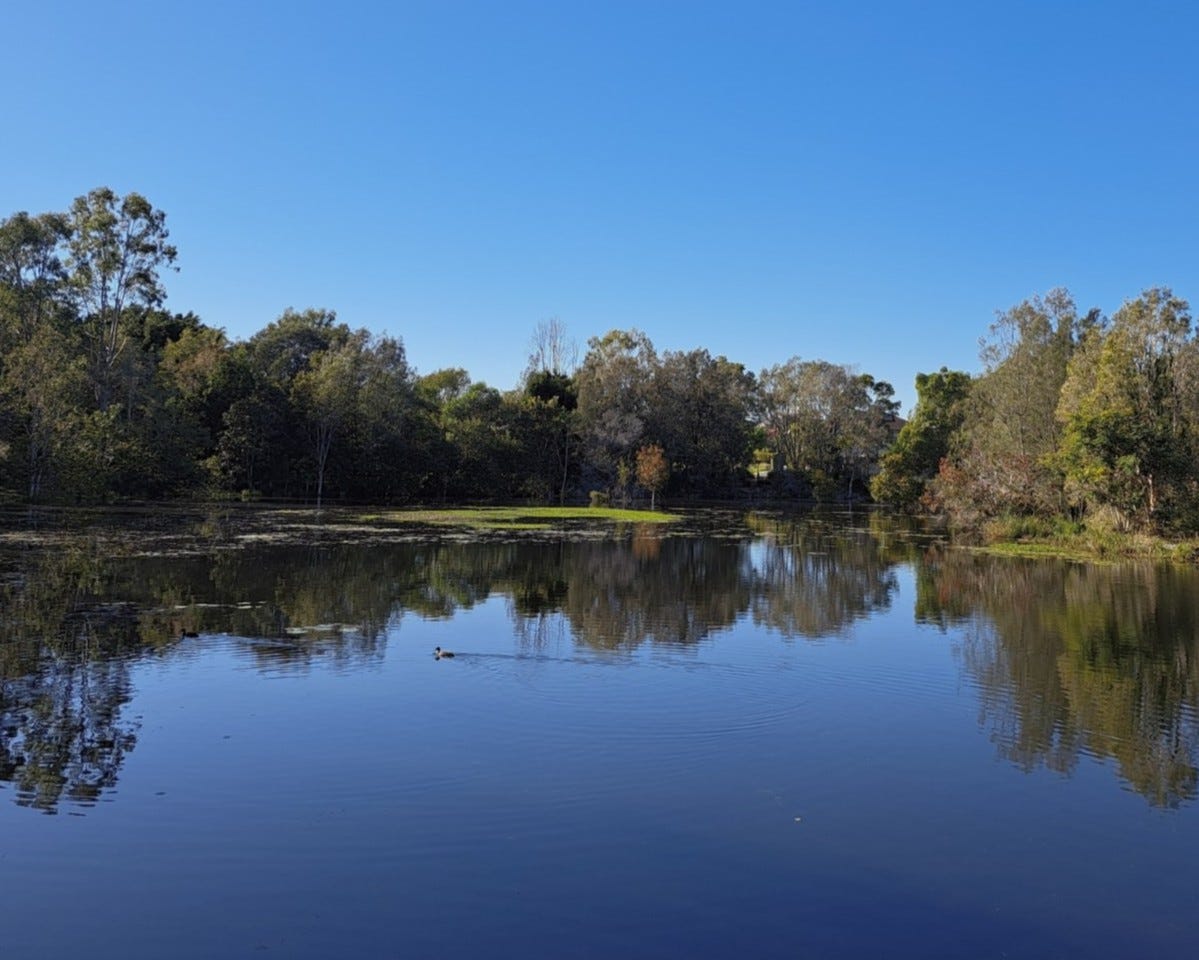
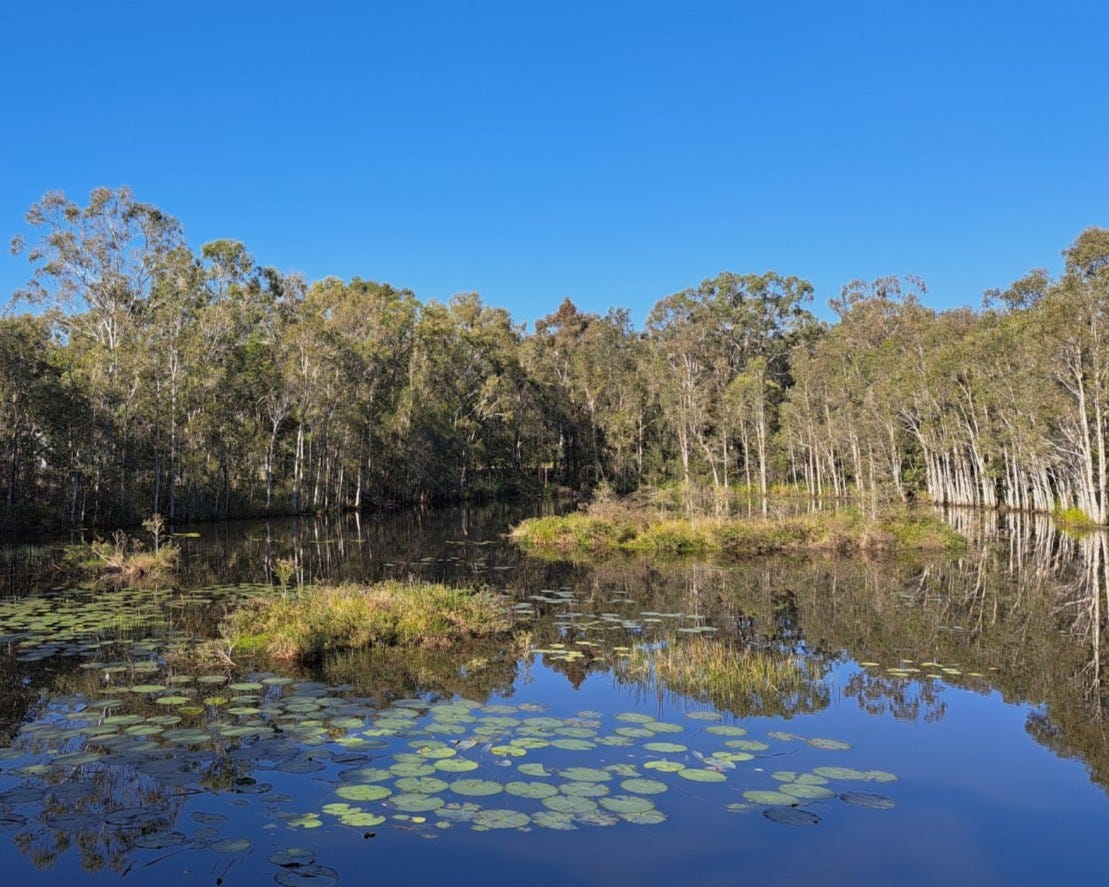
Learning how to use gravity and my body’s centre of balance plus pushing with the right muscles means I can now do something I hadn’t been able to do for years without pain. I can now “jolk” a 5 km circuit around five lakes near my home with little to no pain.
As long as I remember to apply my Tai Chi lessons.
I still have moments as I jolk my circuit when my knees let me know, “You’re doing it wrong … again!”
And every time, I realise that my centre of balance is off. I’ve gone back to my old way of running.
It wasn’t until this week that I realised something that was really quite obvious. Unlike you, I sometimes miss the obvious.
So, what was this amazing revelation?
You’ll probably think, Oh, you silly numbskull. How could you not see that?
However, like applying Tai Chi, it’s how to apply that lesson into other aspects of life that can easily be missed - which I’ll get to soon. First, I should tell you about my “amazing revelation.”
Very simply, I realised that the key to pain-free jolking is not just focusing on the right centre of balance or pushing with the correct muscle at the right moment. I discovered that the easiest way to resolve both of those critical issues is to keep my head up and focus on the target ahead. That’s the easiest way to find the sweet spot where I literally feel no impact on my knees as I move. Seriously. I feel like I’m walking on air.
However, as soon as I look down at the ground in front of my feet, my body leans forward. Keeping my centre of balance where I feel no impact on my knees whatsoever becomes impossible.
Within a few strides, I feel the impact.
Granted, looking down is pretty important where I’m from.

Australia is renowned for the huge number of deadly snakes it has. I’ve seen many Eastern Browns (like in the photo above) and Yellow-faced Whip Snakes on my circuit. And both species are very happy to have a go at you if you get too close.
So, looking down is important.
So is looking up, to be honest.
We’re about to enter nesting season where I live.
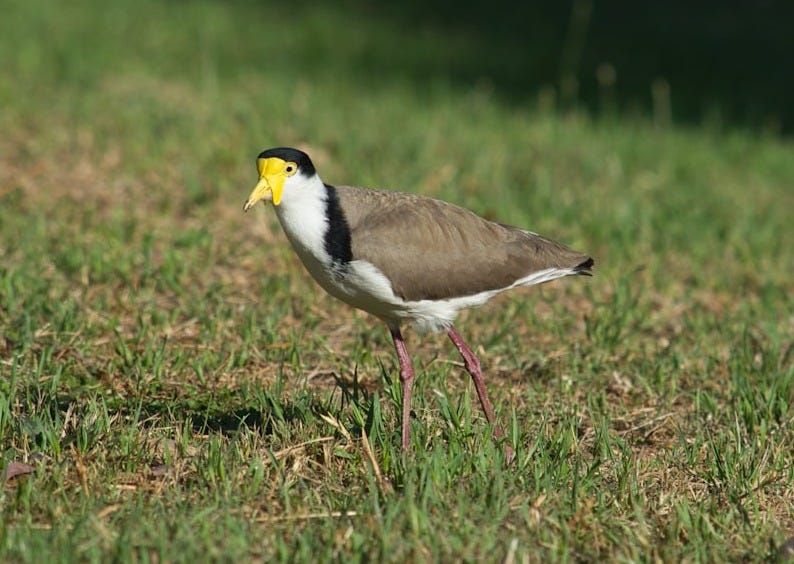
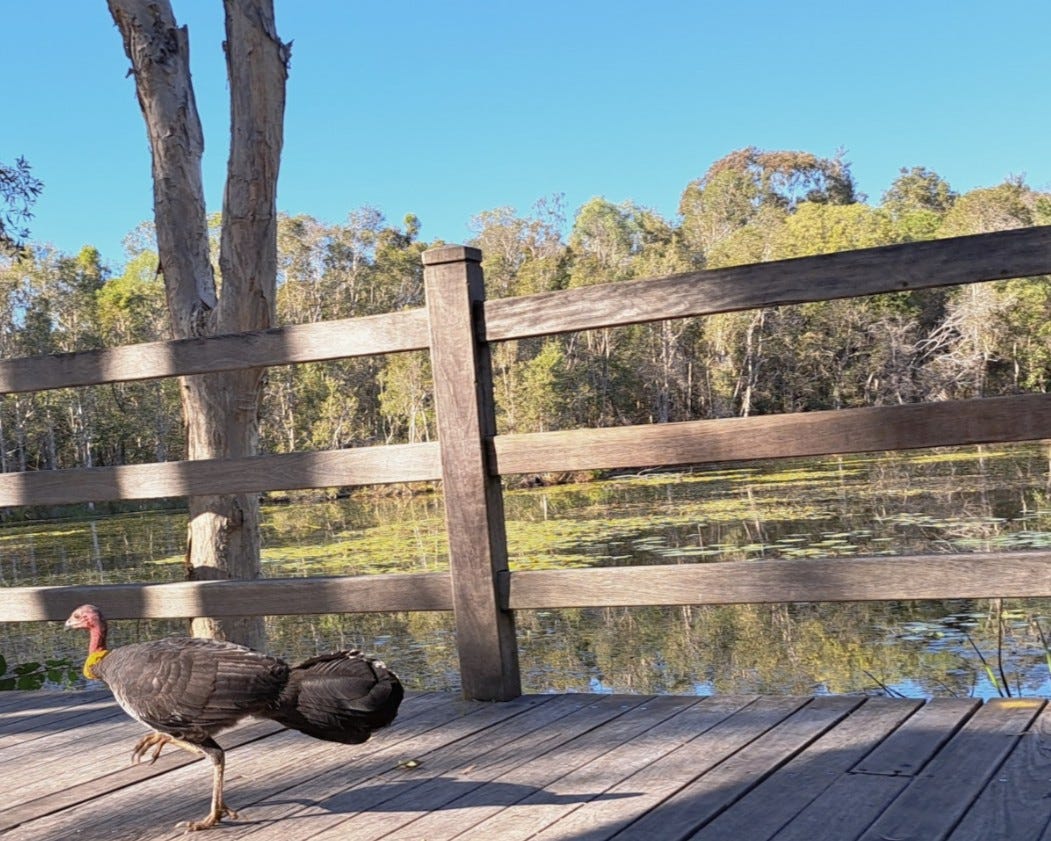
And my local area literally overflows with Black-backed Magpies, Magpie-larks (also known as “peewees”) and Masked Lapwings (what most Aussies incorrectly call Plovers, shown in the photo below), three bird species that have little hesitation with dive bombing and scaring and sometimes even scarring humans foolish enough to wander into their zealously guarded nesting zone.
Understandably, keeping my eyes focused ahead in a way that protects my knees can be difficult.
Yet, if I don’t, I know all too quickly.
So, why am I writing about this?
Well, just like applying Tai Chi lessons to how I stand at my desk or how I jolk my circuit, there are also lessons in this for writing and reading.
I know so many people who want to write a story or simply finish reading a book.
However, after starting in a “blaze of glory,” they get bogged down in each page until that next page seems so arduous. There are so many other things to do, so many demands in life that make finding the time difficult. And the ability to then complete the task of writing or reading a book seems so distant.
Too often, it becomes too distant.
Yet, it’s not about “finding the time.” The key is to make the time.
The honest (and often uncomfortable) truth is that we all make time for the things that matter most.
Reading and writing provide significant health benefits. Fyi, writing doesn’t have to mean a book. I’m so grateful that KJ journaled for much of her life. To learn more about the benefits, click HERE
Having walked with KJ through the most difficult season of my life so far (though it was obviously way harder for her), I see this with such clarity. Amongst all the appointments, procedures, medications, etc. and then the health complications as the disease took its toll, KJ still prioritised the time to connect with others and chat with them about their lives, right up to that last day she was conscious. As I’ve collected stories from so many of her friends for her story, one of the most consistent observations from those who knew her was how she made them feel seen and heard, no matter what KJ was going through herself.
And that was because she chose to view life from that perspective. It was her focus, how she kept her head up and her gaze ahead to see what mattered most.
The disease would never distract KJ from caring for others & letting them know that someone genuinely cared about them. No snakes or lapwings (yeah, I know - you call them plovers) would stop her from seeing what mattered most in what she described as “this adventure called life.”
So, for those of you thinking of writing or reading a story, keep your eye on the goal. I make it a habit to read a chapter or four from my favourite non-fiction book every morning, as it helps focus me for each day. Likewise, I put aside the TV, my computer and phone so I can read a chapter or two of another book (usually fiction) every night. Sometimes, I miss. But that’s okay. It’s just a goal. If I stumble or “feel the pain,” all I do is refocus and keep going. What truly matters is that it doesn’t stop me from taking the next step.
It’s the same with writing KJ’s story. Every week, it’s another step further. Another step deeper. Another step towards writing the greatest story of my life.
I hope that during this next week, you too will take another step (or seven) toward the things that really matter to you. No matter how big or small they are in the eyes of others, make the story of your life count. Step by step.
As you do, keep your eyes ahead. Keep seeing what truly matters the most to you.
And if you stumble along the way, that’s okay. Every day is a new opportunity to refocus and take one more step in this incredibly indescribable adventure called YOUR life.
Rather than doing my “Word of the Month,” I want to add a final thought.
Besides “jolking” my circuit several times a week, I also ride 10 KMs around an old, abandoned golf course four mornings a week, weather permitting.
I’ve learned that the faster you go forward, the more you must focus ahead.
When riding my 18 holes below par, focusing on the road ahead is the best way to avoid low-hanging branches, attacking aves (ie birds), and “danger noodles” (ie killer snakes).
I tell you, there’s not much scarier than a venomous “nope rope” warming itself on the path ahead and you won’t stop in time.
Thankfully, I’ve also learned that riding faster is better. By the time they strike (coz they sure do), I’ve already passed them as I whisper into the wind, Better luck next time, sucker!
Well, that strategy has worked for me so far.
If I stop posting in a few months’ time when it starts warming up and them snakes start stirring, maybe I just wasn’t fast enough!
Thanks for reading my post. However, as I am not a mind-reader, I need you to click the heart-shaped LIKE button to both encourage me & to let me know that you enjoyed this post. Even better, leave a comment so you can tell me what you really think (please, be kind, yet honest).
I will always remember Bryn sharing his "reading habit", a little. theology a little church history, scripture, perhaps a chapter of something recreational etc. With so much focus on social media and other algorithm based content we're exposed to it's easy to become absorbed in a single train of thinking and diminished worldview.